


- WEBSITE -





Current location: Home > BLOGS > Industry Information >
Double Layer and Triple Layer Roll Forming Machine: Getting More Profiles from One Line
Time:2026-10-16 09:41:48 Author:xiangyi Click:69
Double Layer and Triple Layer Roll Forming Machine: Getting More Profiles from One Line
A factory that sells roofing sheet rarely sells only one profile. Customers want trapezoidal tile for one project and a decorative glazed tile for the next. Buying a separate machine for each profile is one answer. Stacking two or three profiles on a single frame is another, and for many workshops it is the better one.
How a Multi-Layer Machine Works
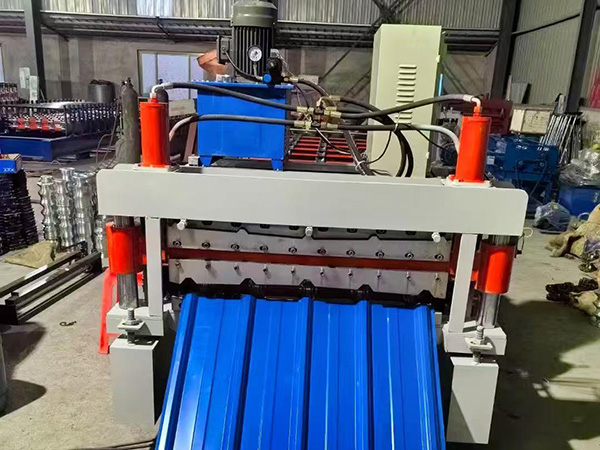
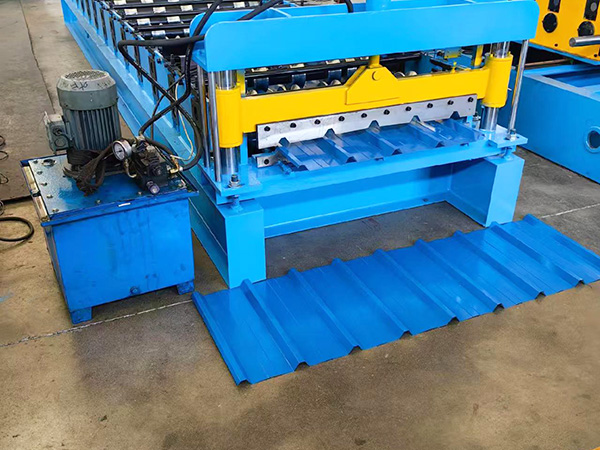
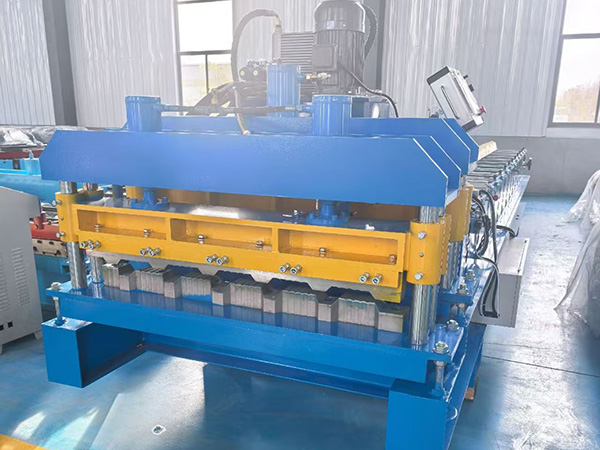
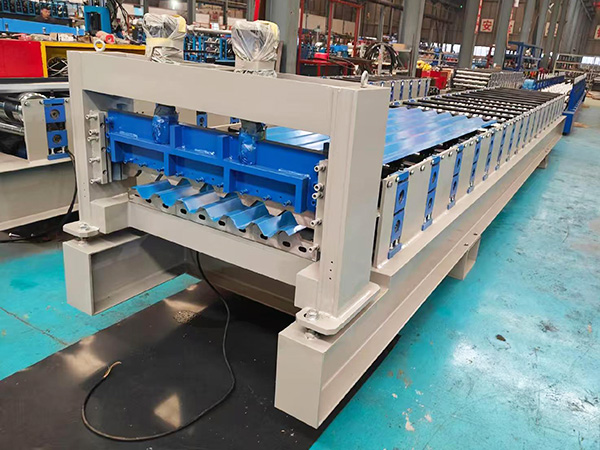
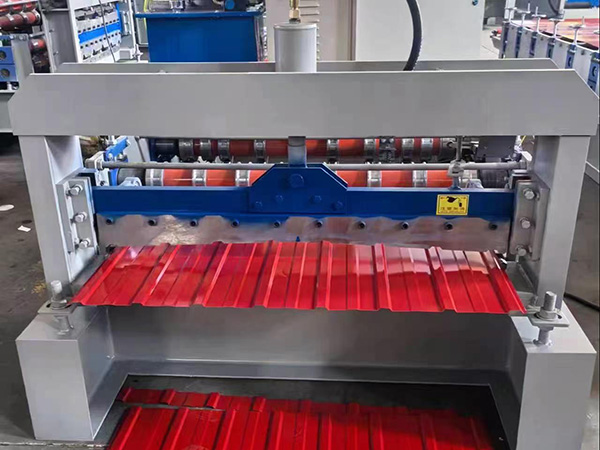
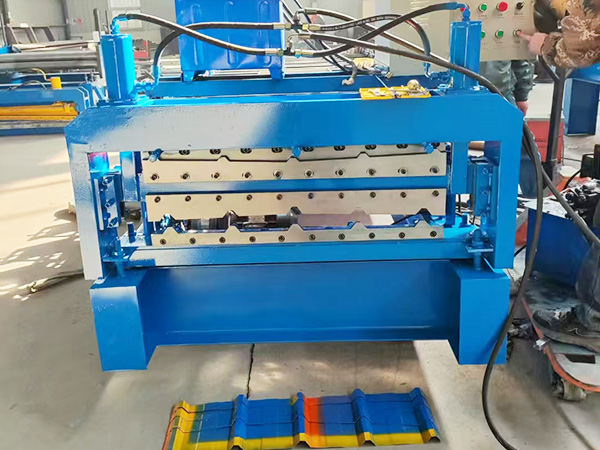
A double layer machine carries two independent sets of forming rollers on one base, one above and one below. A triple layer machine does the same with three sets, often arranged so that the strip can be routed to the layer needed. The layers share the frame, the drive arrangement and, in many designs, the cutting unit and control system.
Only one layer runs at a time. When the factory switches products, the strip is threaded through a different set of rollers, and the machine produces a different profile.
Why Factories Choose Them
The first reason is capital cost. One multi-layer machine costs less than two or three single-layer machines of equivalent quality, and it needs less floor space and less electrical capacity. For a small or medium factory, that difference can decide whether a second product line is affordable at all.
The second reason is market coverage. A workshop with a double layer machine combining a tile layer and a purlin or ridge layer can quote a wider range of orders from a smaller investment, which matters in competitive roofing markets.
The Coil Width Question
Multi-layer machines are usually built so that all layers accept the same coil width, most commonly 1000 mm or 1250 mm. That keeps a single decoiler able to feed any layer and avoids the complexity of different feedstock for different products.
Confirm this point early. If one profile needs a wider coil than the machine accepts, the layer is unusable for that product regardless of what the sales brochure shows.
Changeover and Day-to-Day Operation
Switching layers is not free. The operator has to route the strip, adjust the guides and confirm the settings for the new profile. On a well-designed machine, that is a straightforward routine measured in a short period, not a major re-setup.
If your order book alternates between profiles several times a day, plan the changeover time into your schedule. If you run one profile for most of a shift, the changeover cost is small and easy to absorb.
Cutting, Control and Shared Components
Many multi-layer machines share one cutting unit across the layers, with the blade and length setting adapted to each profile. This saves cost and space, but the cutter must be designed to handle the different section shapes cleanly.
The control system typically stores preset parameters for each layer and profile, so the operator selects a product and the machine recalls the relevant length, count and speed settings. Confirm that the controller has enough presets for your planned product range.
Where the Trade-Offs Show Up
The main trade-off is accessibility. With two or three roller sets packed into one frame, maintenance on the inner layers is tighter than on a single-layer machine. Regular inspection still matters, and the design should allow rolls to be reached without dismantling half the machine.
Forming quality also deserves attention. Each layer needs its own properly engineered flower pattern; squeezing an extra profile onto a frame to save cost is only worthwhile if the roll design is done correctly for every layer.
Single, Double or Triple: Which to Choose
Choose a single-layer machine when one profile carries most of your production and simplicity is worth more than flexibility. Choose a double layer machine when you regularly sell two profiles and want to cover both from one investment. Choose a triple layer machine when three related profiles, for example a glazed tile, a plain tile and a ridge or wall panel, belong to the same market and the same customers.
The deciding question is not how many profiles exist, but how many you actually sell in a normal month. A machine that offers three profiles you barely use is not flexible; it is simply more expensive than the job requires.
Working with a Manufacturer
Ask the manufacturer to show the flower pattern for each layer, to confirm the shared coil width, and to explain the changeover procedure in plain terms. A factory that can answer these questions clearly is one that has built multi-layer machines before, and that experience is worth more than a lower price from a supplier who is learning on your order.
References
Roll Forming Handbook, edited by George T. Halmos, CRC Press, 2005.
ASM Handbook, Volume 14B: Metalworking: Sheet Forming, ASM International, 2006.
EN 10169:2010+A1:2012, Continuously organic coated (coil coated) steel flat products, Technical delivery conditions.
ISO 16162:2012, Continuously cold-rolled steel sheet products, Dimensional and shape tolerances.
Manufacturing Engineering and Technology, Serope Kalpakjian and Steven R. Schmid, Pearson.
J. Paralikas, K. Salonitis and G. Chryssolouris, "Optimization of roll forming process parameters, a semi-empirical approach," International Journal of Advanced Manufacturing Technology, Vol. 47, 2010.
Sheet Metal Forming: Processes and Applications, edited by Taylan Altan and A. Erman Tekkaya, ASM International, 2012.

CONTACTS
TEL:+8615830824095
URL:www.qiluomachinery.com
ADD:Botou City, Cangzhou City, Hebei Province