


- WEBSITE -





Current location: Home > BLOGS > Technical Documentation >
How to Choose a Roll Forming Machine Manufacturer: 12 Checks That Matter
Time:2026-10-22 10:00:53 Author:xiangyi Click:83
How to Choose a Roll Forming Machine Manufacturer: 12 Checks That Matter
Two suppliers can quote the same roll forming machine at prices that differ by thirty per cent, and both can look reasonable on paper. The difference is usually invisible until the machine is on your floor and the first problem arrives. Choosing the right manufacturer is therefore a technical exercise, not a purchase-order formality.
Here are twelve checks that separate a factory worth buying from one worth avoiding.
1. Ask for the Real Specification Sheet
A serious manufacturer publishes shaft diameter, frame thickness, roller material, station count and motor power. A vague quotation that lists only "high speed" and "good quality" is a warning sign. Get the numbers in writing before you compare prices.
2. Look at the Flower Pattern
The flower pattern shows how the strip is bent at each pass. It reveals whether the roll design was engineered for your profile or borrowed from something similar. Ask to see it for your specific drawing, not a generic sample.
3. Inspect Roller Quality and Finish
Rollers are the most expensive and most important part of the machine. Ask about the steel grade, heat treatment and grinding process. If a manufacturer cannot describe how its rollers are finished, the surface quality of your product is a gamble.
4. Check the Frame and Structure
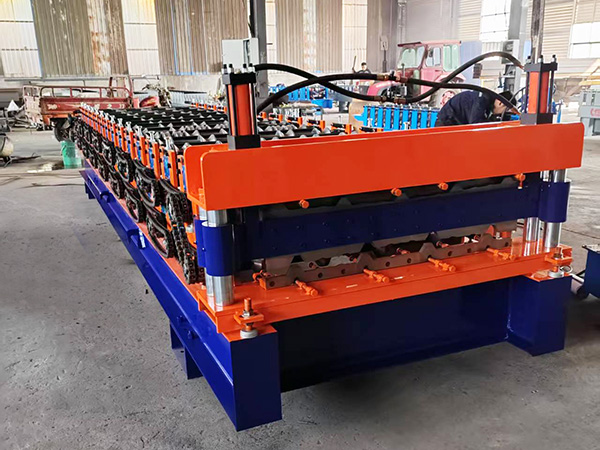
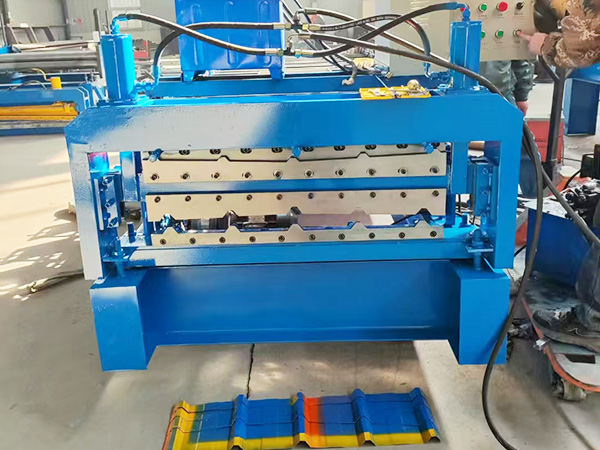
Look at the base and side frames. Heavy welded structure resists vibration at speed and holds accuracy over years of running. Light frames are cheaper and show up as chatter marks and falling precision on the finished sheet.
5. Confirm Component Brands
Electrical parts, PLC, hydraulic components and bearings should be named in the contract. This is where a factory legitimately cuts cost and where a buyer legitimately wants transparency. Knowing the brands also tells you how easy spare parts will be to source locally.
6. See a Machine, Not Just a Catalogue
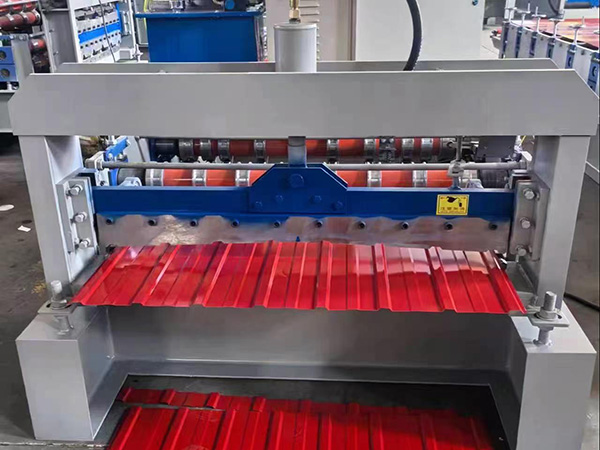
Photographs prove nothing. Insist on a video of the machine running, or a factory visit if the order is large. Watch the feeding, the forming and the cut, and look at the finished panel for marks, camber and twist.
7. Ask About Material Range Tolerance
A machine that forms 0.3 to 0.8 mm coil will not form the same profile correctly at both extremes without adjustment. Ask how the manufacturer handles thickness variation and what changes when you move from thin to thick material.
8. Judge the Cut Quality
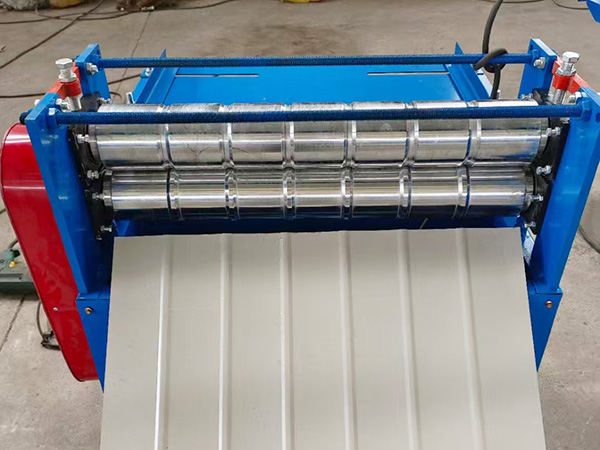
The cutter is often the weak point. Ask whether the cut leaves burrs, whether the blade is hardened, and how often blade maintenance is expected. A clean cut is a small detail that customers notice on the finished product.
9. Understand the Control System
Confirm that the PLC supports batch length setting, counting and fault alarms, and that the operator interface is in a language your staff can read. A capable machine with an unusable interface still costs you money every shift.
10. Ask About Spare Parts and Delivery Time
Ask which parts are held in stock and how long a replacement takes to reach your country. A machine that cannot be repaired for three weeks is not a bargain at any price. Standard, widely available components are worth more than exotic ones.
11. Test the After-Sales Response
Send a technical question before you buy and see how long the reply takes and how specific it is. The quality of communication during the sales process is usually the best available predictor of the support you will get after the invoice is paid.
12. Weigh Documentation and Training
Ask for an operation manual, a maintenance schedule, electrical and hydraulic drawings, and operator training. A manufacturer that trains your staff and hands over full documentation is protecting its own reputation as much as your investment.
13. Confirm the Delivery, Testing and Payment Terms
Ask how the machine will be tested before shipment, who runs the trial, what the packing protects against, and what the payment schedule is tied to. A manufacturer confident in its own machine will agree to a factory acceptance test recorded on video, and will not object to holdback payments linked to successful commissioning at your site.
A Note on Price
Price matters, but it should be compared against specification, not in isolation. Two quotations at different prices are only comparable once the shaft size, roller finish, station count, component brands and after-sales terms are lined up side by side.
The cheapest machine that does the job properly is the right machine. The cheapest machine that cannot is the most expensive one you will ever buy, because you pay for it twice, once at purchase, and again every year in downtime, scrap and lost orders.
References
Roll Forming Handbook, edited by George T. Halmos, CRC Press, 2005, Chapter 12: Acquiring Roll Forming Lines, Education, and Training.
ASM Handbook, Volume 14B: Metalworking: Sheet Forming, ASM International, 2006.
ISO 9001:2015, Quality management systems, Requirements.
EN 10162:2003, Cold-rolled steel sections, Technical delivery conditions, Dimensional and cross-sectional tolerances.
ISO 6892-1:2019, Metallic materials, Tensile testing, Part 1: Method of test at room temperature.
Manufacturing Engineering and Technology, Serope Kalpakjian and Steven R. Schmid, Pearson.
J. Paralikas, K. Salonitis and G. Chryssolouris, "Optimization of roll forming process parameters, a semi-empirical approach," International Journal of Advanced Manufacturing Technology, Vol. 47, 2010.

CONTACTS
TEL:+8615830824095
URL:www.qiluomachinery.com
ADD:Botou City, Cangzhou City, Hebei Province