


- WEBSITE -





Current location: Home > BLOGS > Technical Documentation >
Z Section Steel Roll Forming Machine: Manufacturing and Production Technology
Time:2026-06-29 05:11:49 Author:xiangyi Click:72
Z Section Steel Roll Forming Machine: Manufacturing and Production Technology
Z section steel roll forming machines produce Z-shaped steel profiles that feature overlapping capability for enhanced structural integrity in construction applications. The manufacturing of these machines requires advanced engineering capabilities, precision machining, and rigorous quality control to handle the asymmetrical profile geometry. This article examines the production process, technical configuration, and practical applications of Z section steel roll forming machines.
Machine Manufacturing Process
The production of Z section roll forming machines begins with detailed engineering design using CAD and FEA software. Engineers calculate roll profiles using specialized simulation software that predicts material flow in asymmetrical forming. The asymmetrical Z geometry requires careful roll design to prevent profile twisting during forming. Design outputs include detailed drawings for frame fabrication, roll machining with asymmetric profiles, and assembly procedures.
Frame fabrication employs heavy steel plate cutting (CNC plasma or laser cutting) and welding assembly. Steel plates (Q235B or Q345B, thickness 25-60mm) are cut according to drawings. Welding procedures follow approved WPS - submerged arc welding for main frame assembly, gas metal arc welding (GMAW) for precision components. Post-weld heat treatment at 600-650°C for 2-3 hours eliminates residual stress. Machining of mounting surfaces uses CNC gantry machining centers to achieve flatness within 0.1mm/m and hole position accuracy within ±0.05mm.
Roll tooling manufacturing requires highest precision due to asymmetrical geometry. Roll material selection includes 42CrMo forged steel or D2 tool steel for wear resistance. Roll blanks undergo rough machining, heat treatment (quenching and tempering to 50-55 HRC), then finish machining using CNC lathes and 5-axis CNC machining centers. The asymmetric roll profiles demand specialized machining strategies - rough machining uses 3-axis CNC, finish machining employs 5-axis CNC to achieve complex asymmetric profiles. Profile grinding achieves surface roughness Ra 0.8μm. Final inspection uses coordinate measuring machines (CMM) or 3D scanners to verify asymmetric profile accuracy within ±0.02mm tolerance.
Machine Structure and Drive System
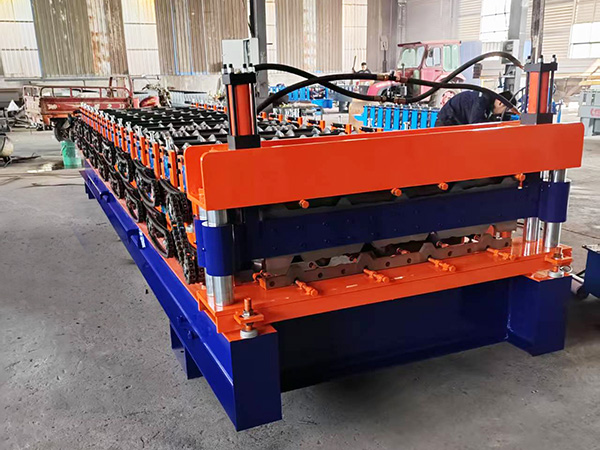
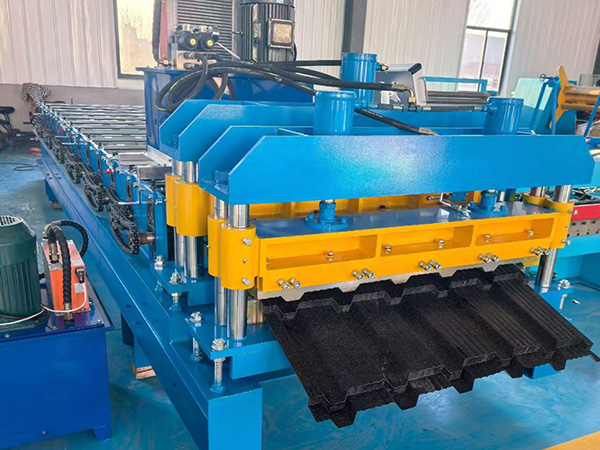
Z section roll forming machines feature either integral welding structure or split type connected by tie rods. Integral welding provides higher rigidity but complicates transportation for large machines (width exceeding container internal dimensions of 2350mm). Split type facilitates container shipping but requires precise field assembly and alignment - connection surfaces use precision machined mating surfaces with positioning pins and high-strength bolts (grade 8.8 or 10.9).
Roll station configuration includes roll shafts, bearing housings, rolls, and adjustment mechanisms. Roll shaft diameter calculation considers bending stress and deflection under asymmetric forming loads - typical diameters range from 60mm to 120mm. Shaft material is 40Cr or 42CrMo, heat treated to 28-32 HRC for toughness. Bearing selection uses cylindrical roller bearings (for radial load) and angular contact ball bearings (for combined radial and axial loads from asymmetric forming forces). Bearing housings bolt to frame side plates, with adjustment slots allowing lateral roll position adjustment (±15mm typical) for profile width variation or twist correction.
Drive system configuration significantly influences machine performance for asymmetric profiles. Traditional systems use a main motor with reduction gearbox driving a distribution gearbox that transmits power to each station via transmission shafts and bevel gear pairs. This system provides positive synchronization but may not accommodate different material flow lengths between upper and lower rolls in Z profiles. Modern systems employ individual servo motors for each roll station, enabling independent speed control - upper and lower rolls can rotate at different speeds to compensate for different material flow lengths in asymmetric Z profiles, preventing material wrinkling or tearing.
Technical Specifications
Material Thickness: 1.5-3.0mm (standard), up to 6.0mm (heavy-duty)
Material Width: 100-350mm (flange width adjustable)
Z Section Dimensions: Z100-Z300 (customizable)
Number of Roll Stations: 14-20 stations (profile-dependent)
Roll Shaft Diameter: 60-120mm (material-dependent)
Forming Speed: 0-18 m/min (standard), up to 25 m/min (high-speed)
Main Motor Power: 15-55kW (depending on profile and speed)
Drive Type: Gear transmission / Individual servo drives
Roll Material: 42CrMo, heat treated 50-55 HRC
Control System: PLC with touchscreen HMI, optional servo drives
Production Application and Operation
In production environments, Z section roll forming machine operation requires trained personnel and systematic procedures. Machine setup involves installing rollsets (for profile change), adjusting roll gaps (critical for asymmetric profiles - gaps may differ between left and right sides), setting guide positions, and programming production parameters (profile dimensions, length, quantity, speed) through the HMI interface.
For manufacturers producing both C and Z sections, quick-change tooling systems significantly reduce changeover time. Some machines employ universal roll design capable of producing both C and Z profiles by adjusting roll lateral positions and gaps. This universal design reduces tooling investment but may compromise optimal roll profiles for each shape. Dedicated roll sets for C and Z profiles provide better forming quality but increase tooling cost and changeover time. The optimal choice depends on production volume mix between C and Z profiles.
Production monitoring ensures consistent output quality for asymmetric profiles. Operators perform first-piece inspection after setup, measuring flange angle (should be 90° ±1°), web flatness (should not exceed 2mm over full length), and twist (should not exceed 1° per meter length). In-process inspection occurs at specified intervals (every 30-50 pieces for high-precision applications) or continuously using inline measurement systems. Measurement data logs support production management and quality traceability. When dimensional deviations exceed tolerance limits, operators execute adjustment procedures - roll gap modification (may require different adjustments for left/right sides due to asymmetry), guide realignment, or material tension modification.
Quality Control in Manufacturing
Quality control in Z section roll forming machine manufacturing encompasses incoming material inspection, in-process monitoring, and final acceptance testing. Incoming inspection verifies steel plate chemical composition (spectrometer), mechanical properties (tensile testing), and dimensional accuracy (thickness gauge, flatness measurement). Roll shaft material undergoes ultrasonic testing (UT) to detect internal defects like inclusions or porosity that could cause failure under cyclic loading, particularly under asymmetric forming forces.
In-process quality control focuses on critical machining and assembly operations. Frame machining dimensions are checked using calipers, micrometers, or portable CMMs. Asymmetric roll profile accuracy is verified using dedicated roll profile gauges or 3D optical scanners - profile deviation should not exceed ±0.02mm. Assembly checks include shaft parallelism measurement (using dial indicators, tolerance within 0.1mm over full length), roll gap uniformity (feeler gauge measurement at multiple points - may differ between left and right sides), and drive system alignment (laser alignment tools for transmission shafts).
Factory acceptance testing (FAT) validates complete machine functionality for asymmetric profile production. No-load testing runs machine at maximum speed for 4-8 hours, monitoring bearing temperature (should not exceed 70°C), vibration (velocity should be less than 4.5 mm/s per ISO 10816), and noise level (should be below 85 dB at 1 meter distance). Load testing uses actual production materials (steel coils with specified thickness and yield strength) to form sample Z profiles, measuring dimensional accuracy (flange angle, web flatness, twist) and surface quality (visual inspection for scratches, edge waviness, or coating damage for pre-coated materials). Documentation includes test reports with measured values, photographic evidence of testing, and certification of compliance with technical specifications. Customers may witness FAT or require third-party inspection (SGS, TUV, etc.) before shipment, particularly for export orders.
Maintenance and Troubleshooting
Proper maintenance ensures long-term machine reliability and product quality for Z section production. Daily maintenance includes cleaning roll surfaces (remove metal debris, coating residue, or oil), checking lubrication points (grease nipples for bearings, chain drives, and slideways), and inspecting safety guards and emergency stop functions. Weekly maintenance includes checking roll gap consistency (measure at both ends of rolls using feeler gauges - may require different measurements for left/right sides due to asymmetry), verifying drive belt or chain tension, and cleaning electrical control cabinet filters.
Common failure modes and troubleshooting procedures for Z section machines include: (1) Profile twist - check roll gap uniformity (asymmetric gaps cause twist), verify shaft parallelism, inspect material entry alignment. (2) Edge waviness - check roll forming sequence (may need more gradual forming for thin materials), verify material tension, inspect roll surface condition. (3) Flange angle deviation - check roll profile accuracy, verify roll shaft deflection under load, adjust roll gap settings. (4) Drive system overload - check servo drive parameters (if individually driven), verify transmission gear lubrication, inspect for mechanical binding in roll stations.
Preventive maintenance scheduling reduces unplanned downtime and extends machine service life. Monthly maintenance includes changing gearbox oil (if applicable, recommended interval 2000-3000 operating hours), checking servo drive cooling fans, and calibrating length measurement systems using standard length samples. Quarterly maintenance includes hydraulic system oil analysis (if machine has hydraulic adjustment systems), roll surface inspection for wear or damage (surface roughness measurement, wear depth assessment - replace rolls if wear exceeds 0.1mm), and drive system alignment verification using laser alignment tools. Annual maintenance includes complete hydraulic oil change (if applicable), overhauling adjustment mechanisms (lead screw cleaning and re-greasing, linear guide cleaning and re-lubrication), and calibrating control system sensors (load cells, encoders, proximity switches). Maintenance records should document all activities, observations, and parts replacements to establish trends and optimize maintenance intervals based on actual equipment condition rather than fixed schedules. This condition-based maintenance approach reduces overall maintenance costs while improving machine availability and product quality consistency.
References
ASTM A1003/A1003M Standard Specification for Steel Sheet, Carbon, Metallic and Nonmetallic Coated
American Iron and Steel Institute (AISI) - Cold-Formed Steel Design Manual
Journal of Constructional Steel Research - Cold-Formed Steel Structures
Mechanical Vibration Standards (ISO 10816-3)
Welding Quality Assurance Standards (AWS D1.1)

CONTACTS
TEL:+8615830824095
URL:www.qiluomachinery.com
ADD:Botou City, Cangzhou City, Hebei Province