


- WEBSITE -





Current location: Home > BLOGS > Industry Information >
Automatic Roll Forming Production Line: Integrated Manufacturing Solutions
Time:2026-06-15 05:58:34 Author:xiangyi Click:115
Automatic Roll Forming Production Line: Integrated Manufacturing Solutions
Modern roll forming operations increasingly adopt integrated, automated production lines that transform the traditional coil-to-profile manufacturing process into a seamless, optimized workflow. These automatic roll forming production lines combine material handling, roll forming, inline processing, cutoff, and product handling into a coordinated system controlled by sophisticated automation. For manufacturers seeking to enhance productivity, reduce labor costs, improve quality consistency, and capture data for continuous improvement, automatic production lines represent a transformative investment in manufacturing capability.
Evolution from Standalone to Integrated Lines
The evolution of roll forming equipment reflects broader manufacturing trends toward automation and integration. Early roll forming machines operated as standalone units, requiring manual material loading, separate punching or cutoff operations, and manual product handling. While functional, this approach limited production speed, introduced quality variability from handling and alignment inconsistencies, and required multiple operators to manage the workflow.
Integrated production lines emerged to address these limitations. By combining multiple process steps into a single, automated line, manufacturers achieve continuous workflow with minimal manual intervention. Material flows from coil to finished product without intermediate handling, reducing damage risk, maintaining dimensional accuracy, and enabling higher production speeds. The integration extends beyond mechanical components to include centralized control systems that coordinate all line functions, monitor production parameters, and collect data for analysis and optimization.
The drivers behind this evolution include labor cost pressures, quality expectations, and competitive dynamics. In regions with rising labor costs, automation offers a path to maintain competitiveness. Quality expectations from customers, particularly in export markets or industries with stringent specifications, demand consistency achievable only through controlled, automated processes. Competitive dynamics push manufacturers to differentiate through shorter lead times, customization capabilities, and value-added services - all enabled by flexible, automated production lines. Equipment suppliers that understand these drivers and can articulate the value proposition of integrated lines position themselves as partners in customer success rather than mere machinery providers.
Components of an Automatic Production Line
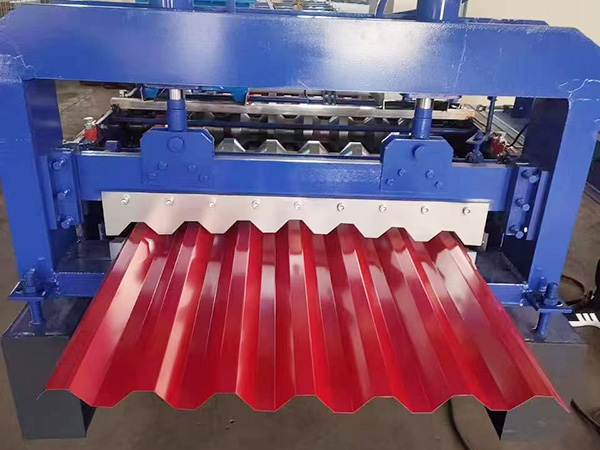
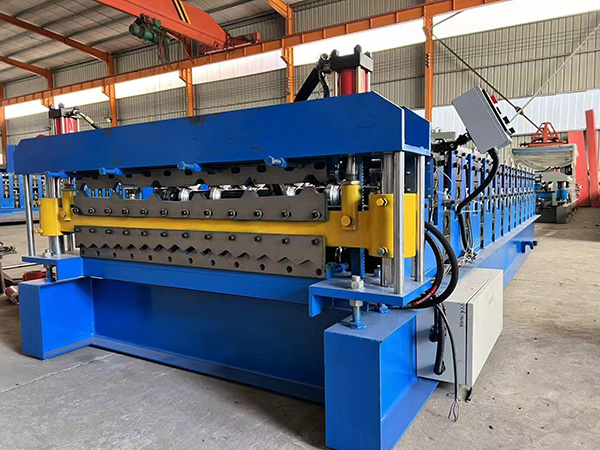
An automatic roll forming production line comprises numerous integrated components, each contributing to the seamless workflow. The entry end typically features an automated decoiling system - dual-head decoilers with coil cars enable continuous operation with minimal downtime for coil changes. Some lines incorporate coil strip welding for truly continuous production, though this adds complexity and cost.
Material entry systems include straighteners (for coil set removal), precision entry guides, and sometimes pre-punching stations for hole patterns required before forming. The roll forming machine itself, in an automatic line, features powered roll adjustment (for profile changes), automatic roll gap control, and integration with the line control system. Drive systems, whether shared or individual per station, synchronize with overall line speed controlled centrally.
Downstream processing may include additional punching stations, embossing stations, or surface treatment stations (like inline application of protective films or labels). The cutoff station, typically a flying cutoff for continuous operation, integrates with the line control for precise length control. Exit handling systems - conveyors, stacking systems, bundling equipment, and packaging stations - complete the automated workflow, enabling the line to operate with minimal direct labor involvement.
Control Systems and Automation Features
The control system serves as the central nervous system of an automatic roll forming line. Modern lines employ programmable logic controllers (PLCs) with human-machine interfaces (HMIs) that provide operators with intuitive control and monitoring capabilities. Touchscreen HMIs display line status, allow parameter adjustment, and present alarms or diagnostic information when issues arise.
Automation features vary by line sophistication. Basic automation includes automatic speed synchronization across line sections, sequence control for startup and shutdown, and fault detection with alarm notification. Intermediate automation adds recipe management (storing setup parameters for different profiles), automatic adjustment of roll gaps or guidances based on recipe selection, and production data logging for traceability.
Advanced automation incorporates servo-driven components with closed-loop control. Individual roll station drives enable independent speed control, accommodating variable profile geometries or compensating for material variations. Inline measurement systems using lasers or cameras detect dimensional deviations and automatically adjust roll positions or process parameters. Some lines integrate with manufacturing execution systems (MES) or enterprise resource planning (ERP) systems, enabling production scheduling, order tracking, and quality data exchange automatically. These advanced features, while adding cost, deliver substantial benefits in flexibility, quality consistency, and operational visibility for manufacturers pursuing Industry 4.0 capabilities.
Material Flow and Process Integration
Efficient material flow underpins the productivity of automatic roll forming lines. The line must accommodate material from uncoiling through finished product without bottlenecks or excessive work-in-progress accumulation. This flow requires careful balancing of process speeds, buffer management between process steps, and coordination of material handling equipment.
Process integration challenges include managing different process speeds and timing requirements. For example, punching operations may require momentarily stopping the material (or using a moving die), while roll forming operates continuously. Cutoff operations must synchronize with line speed to maintain length accuracy. Sophisticated line controls manage these timing differences, employing techniques like accumulating loops, flying dies, or rotary cutoff mechanisms to maintain continuous flow.
Product handling after cutoff presents another integration challenge. High-speed lines can produce hundreds of pieces per hour, requiring automated stacking, counting, and bundling to prevent bottlenecks. Stacking systems may use robotic arms, magnetic lifts, or vacuum grippers depending on profile geometry and weight. Bundling and packaging stations may incorporate automatic strapping, wrapping, or labeling. The integration of these handling systems with the main line control ensures coordinated operation and prevents product damage from mishandling or accumulation.
ROI and Cost Justification
Investing in automatic roll forming production lines requires substantial capital, necessitating thorough return on investment (ROI) analysis. Cost components include equipment purchase, installation, commissioning, operator training, and ongoing maintenance. Benefits accrue from multiple sources: labor cost reduction (through automation), increased production capacity (enabling revenue growth or market share expansion), quality improvement (reducing scrap and warranty costs), and flexibility (enabling shorter runs or customized products that command premium pricing).
Quantifying these benefits demands realistic assumptions and data. Labor cost savings depend on current labor rates, the number of operators displaced per shift, and the number of shifts operated. Capacity increases should consider not just theoretical line speed but also realistic utilization based on market demand and order patterns. Quality improvements require baseline scrap rates and their costs, then realistic improvement targets based on capability of the new equipment.
Payback period calculations synthesize these factors, indicating how long the investment takes to recover through net benefits. Typical payback periods for well-justified automatic roll forming lines range from 2-5 years, though this varies with line complexity, market conditions, and operational efficiency. Beyond financial ROI, strategic benefits like market differentiation, customer retention, and capability for future products also factor into investment decisions. Manufacturers should conduct comprehensive ROI analyses, potentially with assistance from equipment suppliers who can provide benchmark data, application references, and sometimes financing options that improve project economics. Transparent, data-driven ROI discussions between manufacturers and equipment suppliers build trust and align expectations, contributing to successful equipment acquisition and implementation.
Future of Intelligent Manufacturing in Roll Forming
The roll forming industry, like manufacturing broadly, stands at the cusp of transformative technologies under the Industry 4.0 paradigm. Intelligent manufacturing envisions not just automated equipment but interconnected, data-driven production systems capable of self-optimization, predictive maintenance, and adaptive control. For roll forming, this future includes lines that communicate with each other and with upstream/downstream processes, share data for continuous improvement, and potentially operate with minimal human intervention for routine production.
Specific technologies driving this future include the Industrial Internet of Things (IIoT), where sensors throughout the production line collect data on equipment condition, process parameters, and product quality. This data, analyzed in real-time or historically, enables predictive maintenance (scheduling maintenance before failures occur), process optimization (adjusting parameters for quality or speed), and quality prediction (identifying potential quality issues before they manifest as scrap).
Artificial intelligence (AI) and machine learning applications in roll forming remain emerging but hold promise. AI algorithms could optimize roll design, predict springback for new materials, or automatically tune process parameters for quality and speed. While full realization of these capabilities may be years away, manufacturers and equipment suppliers investing in data collection infrastructure and digital connectivity today position themselves to adopt these advanced capabilities as they mature. The competitive landscape of the future likely favors manufacturers with intelligent, connected production systems that deliver superior quality, flexibility, and efficiency. Preparing for this future requires not just equipment investment but also development of digital skills within the organization, cultivation of data-driven decision-making cultures, and willingness to collaborate with technology providers pushing the boundaries of what's possible in roll forming automation and intelligence. Such forward-looking manufacturers, supported by innovative equipment suppliers, will shape the industry's trajectory and capture outsized value from the transition to intelligent manufacturing.
References
ISO 9001:2015 Quality Management Systems - Requirements for Manufacturing Equipment
Journal of Manufacturing Systems - Industry 4.0 and Intelligent Manufacturing
International Journal of Mechanical Sciences - Deformation Analysis in Cold Roll Forming
Metal Forming Magazine - Advances in Roll Forming Technology
Industrial Equipment Standards Manual - Roll Forming Machinery Safety and Performance

CONTACTS
TEL:+8615830824095
URL:www.qiluomachinery.com
ADD:Botou City, Cangzhou City, Hebei Province