


- WEBSITE -





Current location: Home > BLOGS > Technical Documentation >
Aluminum Alloy Roll Forming: Capabilities Challenges and Machine Requirements
Time:2026-10-09 11:39:51 Author:xiangyi Click:170
Aluminum Alloy Roll Forming: Capabilities Challenges and Machine Requirements
Aluminum Is Not Just Light Steel
Aluminum behaves differently from steel in the roll former and treating it as just a thinner lighter version of steel leads to problems. The lower yield strength means less force is needed but the higher springback and lower modulus mean the final dimensions are harder to control. The softer surface scratches more easily and the material work-hardens with each bend which changes its properties as it passes through the line. Understanding these differences is the first step to forming aluminum successfully.
Springback and Over-Bending
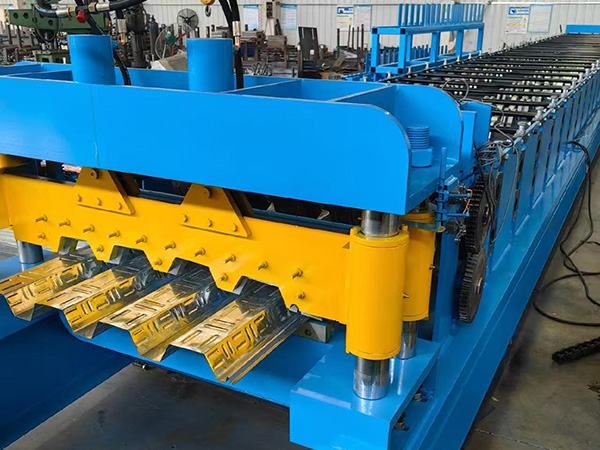
Aluminum springs back more than steel for the same thickness and grade which means the roll stations must bend the profile slightly past the target angle to compensate. The final sizing station takes out the springback and locks the correct angle. Without this compensation the finished profile measures open at the corners and the flange angles fall short of the drawing specification.

Surface Protection
Running Aluminum Without Damage
Roll surface: Polished rolls not etched or textured ones prevent the surface drag that scratches aluminum. Any particle embedded in the roll surface transfers directly to the soft aluminum strip.
Lubrication: Aluminum-specific lubricants prevent the staining and adhesion that petroleum oils cause on aluminum. Apply a thin even film. Excess pools and creates handling hazards on the shop floor.
Handling: Aluminum scratches more easily than steel. Use soft-slings for coil loading and keep panels separated in the stack with cardboard or foam interleaving.
Tooling Requirements
Standard steel rolls work for aluminum but the roll surface finish matters more. For architectural aluminum profiles with a visible finish chrome-plated or polished rolls give the best surface. For structural aluminum hardened ground rolls in tool steel are adequate. The roll material for aluminum should be matched to the alloy and the surface requirement before ordering the tooling.
Alloy Selection and Temper
Not all aluminum alloys are suitable for roll forming. The 3000 and 5000 series alloys in appropriate tempers form well and are widely used for architectural and structural profiles. The 6000 series alloys especially in the T6 temper have higher strength but lower ductility and require more careful roll design. Specify the exact alloy and temper when asking a supplier about tooling because the recommended roll pressure and bend radii change with the alloy.
Speed and Power Adjustments
Aluminum lines typically run at lower speeds than equivalent steel lines because the material is more prone to surface defects at high speed. The drive motor requirements are lower due to the reduced forces but the line still needs precise tension control to avoid the nesting and telescoping of finished panels that softer aluminum is prone to on the run-out table.
Finding an Aluminum Roll Forming Supplier
Not every roll forming supplier has experience with aluminum and the ones who do will be upfront about which alloys they can run reliably. Ask the supplier specifically about their aluminum experience what alloys they have formed and what surface finish they achieved. A supplier who hesitates on the aluminum question is not the right partner for aluminum work regardless of how strong their steel reputation is.
References
Roll Forming Technology and Equipment Design Manual
ASM Handbook Volume 14B: Sheet Metal Forming
Industrial Machine Safety and Operating Standards
Metal Material Standards and Grade Selection Guide
Roll Forming Line Configuration Engineering Handbook
Maintenance Practices for Long-Term Reliability
Regular maintenance on roll forming equipment keeps the line running at its rated speed and extends the service life of every major component. The daily routine should include checking hydraulic oil level and temperature, inspecting roll surfaces for wear or embedded debris, verifying the cutoff blade edge, and confirming that all safety interlocks are functional. These checks take 10 to 15 minutes per shift and catch the problems that become production-stopping failures if left unchecked. A factory that makes maintenance a habit rather than a chore sees the difference in uptime within the first month.
Common Mistakes and How to Avoid Them
The most common mistakes in roll forming operations come from skipping the basics: running material outside the rated thickness range, skipping the leveler on products that need it, over-tightening rolls on pre-painted material, and failing to record roll settings between runs. Each of these mistakes has a clear cause and a clear fix. The factory that builds a written checklist for every production run and trains operators to follow it without exception eliminates most of the scrap and downtime that comes from avoidable errors. A good supplier provides that checklist as part of the commissioning process; the factory that writes its own is better served because it reflects the actual operating conditions.

CONTACTS
TEL:+8615830824095
URL:www.qiluomachinery.com
ADD:Botou City, Cangzhou City, Hebei Province