


- WEBSITE -





Current location: Home > BLOGS > Technical Documentation >
C Section Steel Roll Forming Machine: Manufacturing and Production Technology
Time:2026-06-22 04:55:27 Author:xiangyi Click:172
C Section Steel Roll Forming Machine: Manufacturing and Production Technology
C section steel roll forming machines produce C-shaped steel profiles (commonly called C purlins or C channels) used extensively in construction and infrastructure projects. The manufacturing of these machines requires precision engineering, robust structural design, and sophisticated control systems. This article examines the production process, technical configuration, and practical applications of C section steel roll forming machines in industrial manufacturing environments.
Machine Production Process
The manufacturing of C section steel roll forming machines begins with detailed engineering design and simulation. Engineers use roll forming simulation software to calculate incremental bending sequences for C profile geometry - web height, flange width, lip length, and corner radii. The simulation predicts material flow, strain distribution, and springback, enabling roll profile optimization before physical production. Design outputs include manufacturing drawings for frame fabrication, roll machining, and electrical control system configuration.
Frame fabrication employs heavy steel plate cutting and welding assembly. Steel plates (Q235B or Q345B, thickness 25-60mm) are cut by CNC plasma cutting machines according to drawings. Welding procedures follow approved WPS (Welding Procedure Specification) - submerged arc welding for main frame assembly, argon arc welding for precision components. Post-weld heat treatment at 600-650°C for 2-3 hours eliminates residual stress and prevents deformation during subsequent machining. Machining of mounting surfaces uses CNC gantry boring-milling machines to achieve flatness within 0.1mm/m and hole position accuracy within ±0.05mm.
Roll tooling manufacturing requires precision machining and heat treatment. Roll material selection includes 42CrMo forged steel or D2 tool steel for high wear resistance. Roll blanks undergo rough turning, heat treatment (quenching and tempering to 50-55 HRC), then finish machining using CNC lathes and CNC milling machines. Profile grinding achieves surface roughness Ra 0.8μm. For manufacturers producing multiple C section sizes, roll design may incorporate adjustable features - movable roll blocks or interchangeable roll segments that accommodate different web heights without complete rollset changeover.
Machine Structure and Drive System
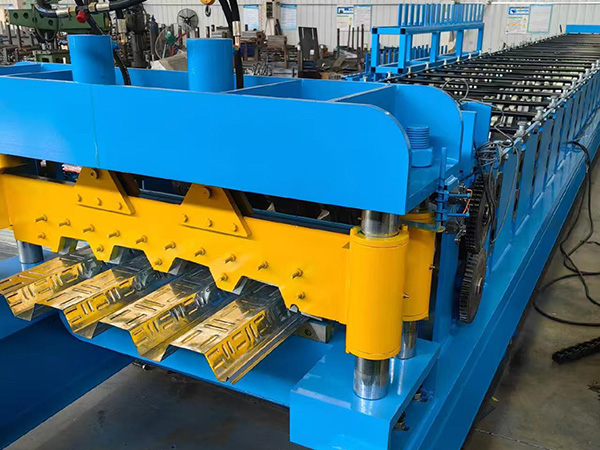
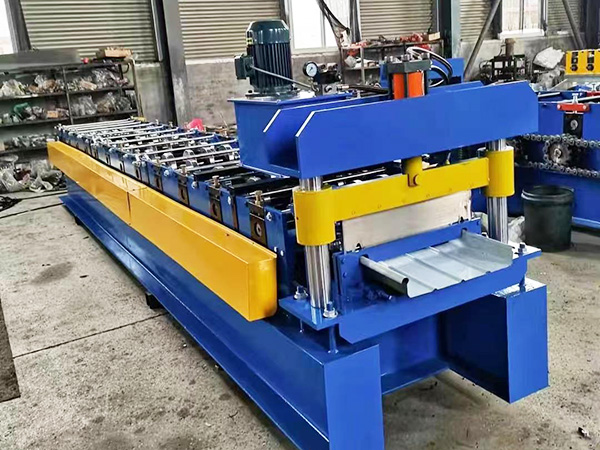
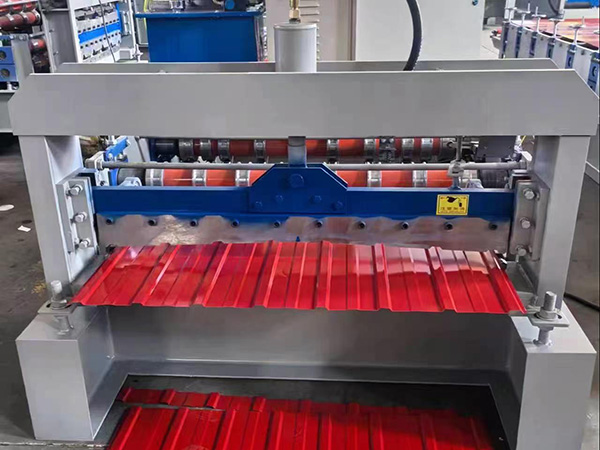
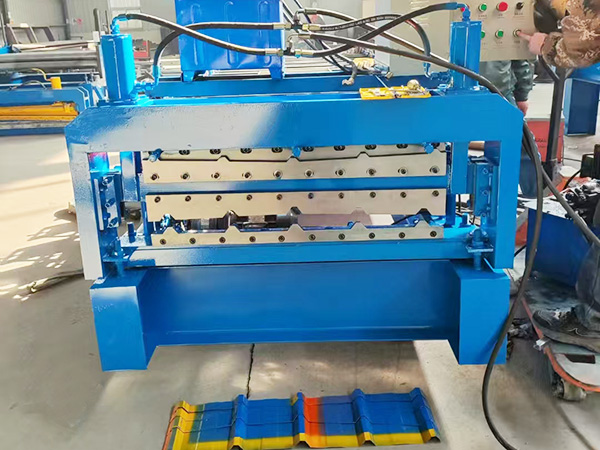
A typical C section roll forming machine consists of a rigid frame, multiple roll stations, drive system, and control system. Frame structure adopts either integral welding type or split type connected by tie rods. Integral welding provides higher rigidity but complicates transportation for large machines (width exceeding container internal dimensions). Split type facilitates container shipping but requires precise field assembly and alignment - connection surfaces use precision machined mating surfaces with positioning pins and high-strength bolts.
Roll station configuration includes roll shafts, bearing housings, rolls, and adjustment mechanisms. Roll shaft diameter calculation considers bending stress and deflection - typical diameters range from 50mm (small machines for thin materials) to 120mm (heavy-duty machines for thick or high-strength materials). Shaft material is 40Cr or 42CrMo, heat treated to 28-32 HRC for toughness. Bearing selection uses cylindrical roller bearings (for radial load) and angular contact ball bearings (for combined radial and axial loads from forming forces). Bearing housings bolt to frame side plates, with adjustment slots allowing lateral roll position adjustment (±15mm typical) for profile width variation or roll gap fine-tuning.
Drive system configuration significantly influences machine performance and flexibility. Traditional drive systems use a main motor with reduction gearbox driving a distribution gearbox that transmits power to each station via transmission shafts and bevel gear pairs. This system provides positive synchronization and cost-effectiveness but generates mechanical losses (approximately 15-20% power loss) and requires periodic gear lubrication and alignment maintenance. Modern systems employ individual servo motors for each roll station, enabling independent speed control and eliminating transmission losses. Servo-driven systems also allow asymmetric profile forming (like Z sections) where roll speeds differ between upper and lower rolls to compensate for different material flow lengths in asymmetric profiles.
Technical Specifications
Material Thickness: 1.5-3.0mm (standard), up to 6.0mm (heavy-duty)
Material Width: 100-300mm (web height adjustable)
C Section Dimensions: C80-C300 (customizable)
Number of Roll Stations: 12-18 stations (profile-dependent)
Roll Shaft Diameter: 60-120mm (material-dependent)
Forming Speed: 0-20 m/min (standard), up to 30 m/min (high-speed)
Main Motor Power: 11-45kW (depending on profile and speed)
Drive Type: Gear transmission / Individual servo drives
Roll Material: 42CrMo, heat treated 50-55 HRC
Control System: PLC with touchscreen HMI, optional servo drives
Inline Punching Integration
C section production often requires inline punching for bolt holes, web holes, or flange holes used for connections. Integrating punching with roll forming enables continuous production without secondary operations. Punching stations locate after the roll forming section (for holes that must be precisely positioned relative to profile shape) or between roll stations (for holes that can be punched in flat material before final profile formation).
Hydraulic punching presses provide the force required for hole fabrication. Press capacity calculation considers material thickness, hole diameter, and material yield strength - typical capacities range from 40 tons to 120 tons. Punching dies require high-precision manufacturing (tolerance ±0.05mm for hole diameter) and heat treatment (SKD11 die steel, 58-62 HRC) for wear resistance. Die changeover systems use quick-change die holders, reducing changeover time from hours to minutes when switching between hole pattern configurations.
Synchronization between punching and material feed is critical for hole position accuracy. Servo-driven feed systems use encoder feedback from material feed rollers to track material position. Punching triggers when material reaches programmed position - positioning accuracy within ±1mm is achievable with proper system configuration. For applications requiring multiple hole patterns along profile length, programmable logic controllers (PLC) store pattern recipes and automatically adjust punching sequences based on production requirements. This programmability enables flexible production of different C section lengths and hole patterns without manual die changeover, reducing setup time and increasing production efficiency.
Production Application and Quality Control
In practical production applications, C section roll forming machines operate in demanding industrial environments. Machine setup involves installing rollsets (for profile change), adjusting roll gaps, setting guide positions, and programming production parameters (profile dimensions, hole patterns, cut length, quantity) through the HMI interface. For manufacturers producing multiple C section sizes, quick-change tooling systems significantly reduce changeover time - cassette systems allow complete roll sets to be pre-assembled and quickly swapped, reducing changeover from 2-3 hours to 20-30 minutes.
Quality control during production ensures dimensional accuracy and structural performance. Dimensional inspection includes measuring web height, flange width, lip length, and material thickness using calipers, micrometers, or dedicated profile gauges. Dimensional tolerances per ASTM A1003 or EN 10162 standards typically allow ±1.5mm for web height, ±1.0mm for flange width, and ±0.5mm for lip length. Hole position accuracy verification uses coordinate measuring equipment or hole pattern gauges - hole center distance tolerance typically ±1.0mm.
Surface quality inspection identifies defects like edge waviness, twisting, or coating damage (for pre-galvanized or pre-painted materials). Edge waviness measurement uses straightedge and feeler gauge - waviness should not exceed 2mm over 1000mm length. Twist measurement uses twist gauge or visual assessment against straightedge - twist should not exceed 1° per meter length. For manufacturers supplying structural steel products to construction projects, comprehensive quality documentation including mill test reports, dimensional inspection reports, and coating thickness measurements (for coated materials) provides traceability and compliance evidence for project quality assurance requirements. Establishing and maintaining quality management system certification (ISO 9001) demonstrates commitment to consistent quality and facilitates market access, particularly for export markets with stringent quality requirements.
Maintenance and Operational Efficiency
Proper maintenance ensures long-term machine reliability and product quality consistency. Daily maintenance includes cleaning roll surfaces (remove metal debris, oil residue, or coating particles), checking lubrication points (grease nipples for bearings, chain drives, and slideways), and inspecting safety guards and emergency stop functions. Weekly maintenance includes checking roll gap consistency (measure at both ends of rolls using feeler gauges), verifying drive belt or chain tension, and cleaning electrical control cabinet filters to prevent overheating of electronic components.
Preventive maintenance scheduling reduces unplanned downtime and extends machine service life. Monthly maintenance includes changing gearbox oil (if applicable, recommended interval 2000-3000 operating hours), checking servo drive cooling fans, and calibrating length measurement systems using standard length samples. Quarterly maintenance includes hydraulic system oil analysis (viscosity, water content, particulate contamination), roll surface inspection for wear or damage (surface roughness measurement, wear depth assessment), and drive system alignment verification using laser alignment tools.
Operational efficiency optimization involves production planning, tooling management, and continuous improvement initiatives. Production planning sequences jobs to minimize changeover frequency - grouping same-profile, same-thickness jobs reduces setup time and material waste. Tooling management includes proper storage of rollsets (climate-controlled environment to prevent corrosion), regular inspection and reconditioning of worn rolls (roll profile re-grinding or replacement when wear exceeds 0.1mm), and maintaining inventory of consumable parts (seals, bearings, punching dies). Continuous improvement initiatives use production data (downtime reasons, scrap rates, production speeds) to identify improvement opportunities - for example, analyzing scrap patterns may reveal roll alignment issues or material quality problems; addressing root causes reduces scrap rates and improves overall equipment effectiveness (OEE). Manufacturers implementing comprehensive maintenance and efficiency optimization programs typically achieve 15-25% improvement in productive output compared to reactive maintenance approaches, demonstrating the significant return on investment from systematic maintenance and operational excellence practices.
References
ASTM A1003/A1003M Standard Specification for Steel Sheet, Carbon, Metallic and Nonmetallic Coated
EN 10162 Cold Rolled Steel Sections - Technical Delivery Conditions
American Iron and Steel Institute (AISI) - Cold-Formed Steel Design Manual
Welding Quality Assurance Standards (AWS D1.1)
Mechanical Vibration Standards (ISO 10816-3)

CONTACTS
TEL:+8615830824095
URL:www.qiluomachinery.com
ADD:Botou City, Cangzhou City, Hebei Province