


- WEBSITE -





Current location: Home > BLOGS > Technical Documentation >
How to Choose the Right Roll Forming Machine: Complete Buyer's Guide
Time:2026-07-06 09:42:02 Author:xiangyi Click:181
How to Choose the Right Roll Forming Machine: Complete Buyer's Guide
Selecting appropriate roll forming equipment represents a significant investment decision that impacts production capabilities and business profitability for years. Many manufacturing facilities struggle with evaluating competing equipment proposals and determining which machine configuration best matches their operational requirements. This comprehensive guide walks through the critical evaluation criteria that distinguish excellent equipment investments from costly mistakes, enabling informed purchasing decisions.
Assessing Production Requirements
Before examining any equipment specifications, production managers must clearly define their operational requirements. Material specifications including thickness ranges, width capacities, and steel grades directly determine the machine configuration needed. Facilities planning to process multiple material types require equipment with broader capability ranges, while specialized operations may benefit from optimized single-purpose configurations.
Production volume expectations influence equipment selection through speed requirements and automation features. High-volume operations demanding continuous production benefit from faster line speeds and automated changeover systems that reduce downtime between runs. Lower-volume facilities may prioritize flexibility over maximum throughput, selecting equipment with easier manual adjustments and broader product range coverage.
Evaluating Machine Specifications
Key Technical Parameters to Compare
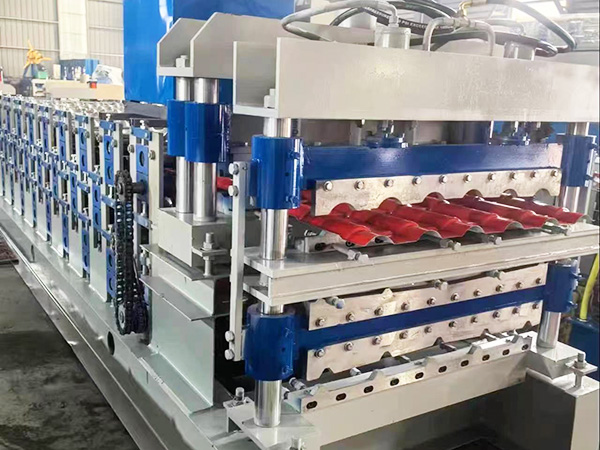
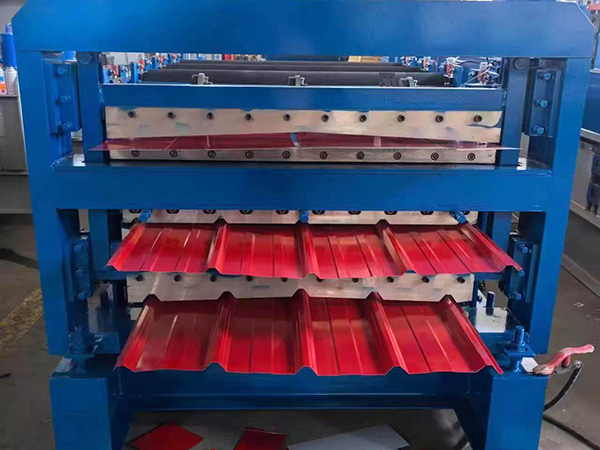
Frame Rigidity: Machine frames must resist deformation under forming loads. Heavy-walled steel construction with adequate section modulus prevents accuracy degradation during extended production runs. Insufficient rigidity manifests as dimensional drift over time or inconsistent product quality across production batches.
Roll Station Count: More stations enable gradual forming that reduces material stress and surface defects. Complex profiles require additional stations for proper geometry development. Rushing formation through insufficient stations risks cracking, wrinkling, or springback issues in finished products.
Drive System Capacity: Motor power must match the forces required for target materials and profiles. Underpowered drives struggle with thicker materials or deeper forming operations, causing speed reductions and potential motor overload. Margin above minimum requirements provides operational flexibility.
Supplier Capability Assessment
Equipment suppliers vary dramatically in manufacturing capabilities, technical expertise, and support resources. Factory manufacturers with in-house engineering and production facilities deliver better quality control and faster issue resolution compared to assembly operations relying on purchased components. Visiting supplier facilities provides insights into manufacturing practices, quality systems, and workforce capabilities.
Technical support availability significantly influences long-term equipment satisfaction. Suppliers offering comprehensive training, responsive service, and spare parts access protect production investments throughout equipment life. Evaluate whether suppliers maintain local service representation or require extended response times for technical assistance requests.
Investment Return Analysis
Equipment pricing must be evaluated alongside productivity projections and quality improvements. Higher-priced equipment with superior accuracy may reduce scrap rates and improve customer satisfaction enough to justify premium costs. Automation features that reduce labor requirements or changeover times frequently deliver attractive return periods through operating cost savings.
Consider total cost of ownership including installation, training, tooling, and ongoing operational expenses. Budget-conscious decisions focusing only on purchase price often incur greater costs through reduced productivity, elevated scrap rates, and frequent maintenance requirements. The most economical choice typically balances acquisition cost against lifetime operating efficiency.
Making the Final Decision
After completing technical evaluations and supplier assessments, compile comparison matrices that objectively score equipment proposals across weighted criteria. Define minimum acceptable thresholds for critical parameters while allowing flexibility for secondary considerations. Preferred suppliers meeting primary requirements deserve priority regardless of minor specification differences.
Request production trials using actual materials and target profiles when possible. Watching equipment operate under representative conditions reveals practical insights unavailable from specification sheets alone. Observe material handling, sound levels, surface finish quality, and operator interface usability during demonstration runs. These real-world observations often prove decisive in final selections.
References
Manufacturing Equipment Investment Guidelines and Best Practices
Industrial Machinery Procurement Standards and Checklists
Metal Forming Industry Technical Publications on Equipment Selection
Total Cost of Ownership Analysis Methodologies for Capital Equipment
Factory Evaluation Protocols for Equipment Suppliers

CONTACTS
TEL:+8615830824095
URL:www.qiluomachinery.com
ADD:Botou City, Cangzhou City, Hebei Province