


- WEBSITE -





Current location: Home > BLOGS > Technical Documentation >
Roll Forming Machine Installation Guide: Indoor vs Outdoor
Time:2026-09-30 08:02:11 Author:xiangyi Click:182
Roll Forming Machine Installation Guide: Indoor vs Outdoor
Correct installation decides whether a roll forming line reaches its rated speed and accuracy. A line placed on a poor foundation or aligned in a hurry will fight the operator for its whole life. This guide covers where to install the machine, how to prepare the floor, and what to check during commissioning, so the start-up goes smoothly and the line earns its keep from the first week.
Indoor or Outdoor: Which to Choose
Most suppliers recommend indoor installation. A roof and walls keep rain, dust, and temperature swing away from the rolls, electronics, and hydraulic oil. Coated strip especially suffers outdoors; morning condensation spots the surface and later shows as rust on the roof. Indoor space also protects the operator and lets one person supervise more lines at once.
Outdoor installation is possible where indoor space is unavailable, but it needs a hard level base, a weather shelter over the electrical cabinet, and a cover for the coil. Expect shorter service intervals on chains, bearings, and the hydraulic system. For a permanent production line, the extra building cost pays back through fewer breakdowns and steadier product quality.
Foundation and Leveling
Preparation Steps
Concrete base: A reinforced slab, typically 200 mm or more, carries the line without settling. Anchor bolts set in the wet concrete or with chemical anchors fix the machine feet against the pull of the drive.
Level across the line: Use a precision level on the machine bed. The decoiler, roll former, and cutoff must share one reference plane so the strip travels straight from feed to shear.
Centerline alignment: Stretch a string line through the machine center from decoiler to cutoff. Every station is set to this line; a few millimeters off here becomes edge wave and twist later in production.
Utility Connections
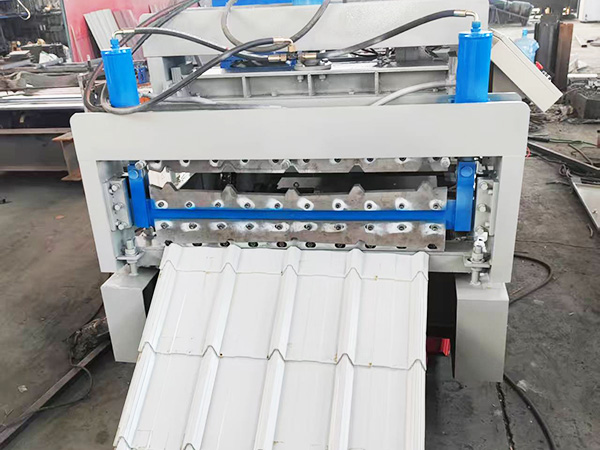
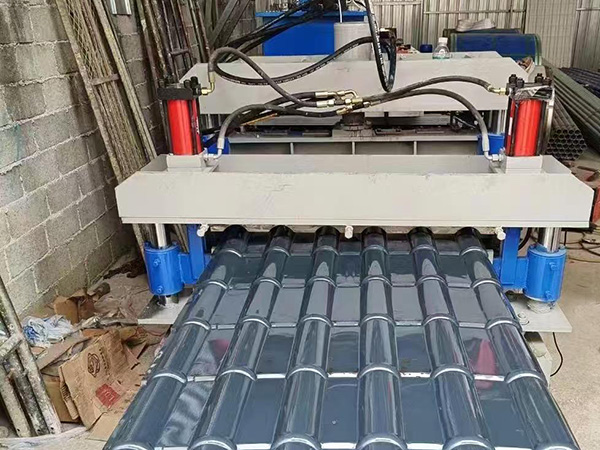
Plan the power feed, air line, and hydraulic supply before the machine arrives. Route the main cable in conduit away from the cutting area where sparks fly, and provide a dedicated breaker sized to the motor nameplate. A clean, labeled connection panel saves hours during commissioning and during any later service call by the supplier.
Power, Hydraulics, and Safety
Confirm the supply matches the specification: voltage, phase, and capacity for the main motor and the hydraulic unit. Undersized wiring causes voltage drop that trips the drive under load. Route the hydraulic pipes without tight bends and bleed air from the system before first run to protect the pump from cavitation.
Fit all guards and emergency stops before energizing. Test each emergency stop and light curtain. Never run the line with guards removed, even for a trial; a moment of contact with rotating rolls is permanent and changes a career in an instant.
Commissioning and First Run
Commissioning starts with a no-load run: listen for abnormal noise, check rotation direction, and confirm the flying shear timing. Then feed a short test coil and form scrap lengths, measuring the profile at each station. Adjust roll pressure and side guides until the test piece matches the drawing within tolerance.
The supplier should train the team during commissioning and hand over the operation and maintenance manuals. A careful first week, run at reduced speed, builds confidence and catches settings that look right but drift under load. That patience at installation pays for itself in years of steady output and low scrap. Document the confirmed settings in the manual's blank pages so the next shift starts from proven numbers rather than memory, which avoids a slow drift back into the faults you just corrected.
Common Installation Mistakes
The mistakes that hurt lines later are small at the time. Skipping the level check, leaving the centerline a few millimeters off, or under-sizing the power cable all pass commissioning and then surface as wave, twist, or tripping under load. Investing the extra day in careful alignment and correct utilities prevents months of fighting symptoms that trace back to the install date.
References
Industrial Machine Foundation Design Guidelines
Roll Forming Line Installation and Alignment Manual
Electrical Supply Requirements for Motor Drives
Machine Commissioning and Trial Run Procedures
Equipment Leveling and Survey Standards

CONTACTS
TEL:+8615830824095
URL:www.qiluomachinery.com
ADD:Botou City, Cangzhou City, Hebei Province