


- WEBSITE -





Current location: Home > BLOGS > Technical Documentation >
Upgrading Old Roll Forming Lines: Modernization Guide
Time:2026-10-03 10:01:56 Author:xiangyi Click:134
Upgrading Old Roll Forming Lines: Modernization Guide
Many factories run roll forming lines that are mechanically sound but electronically dated. The rolls and frame still form good profile, yet the relay controls, worn drive, and missing safety devices limit output and create risk. Rather than scrap a working line, modernization upgrades the weak parts and restores competitiveness at a fraction of new-machine cost, often with a payback measured in months rather than years.
When an Old Line Is Worth Upgrading
The best candidates are lines with a solid base and good rolls but outdated controls. If the frame is cracked, the shafts are bent, or the profile is obsolete, replacement is the better path. A supplier can inspect the line and tell you honestly whether refurbishment makes sense or whether you are polishing a machine past its value, saving you from a wasted investment. A useful rule is to compare the rebuild cost against sixty percent of a new line; above that threshold, new usually wins on warranty and efficiency.
Control and Drive Modernization
High-Impact Upgrade Areas
PLC and touch screen: Replacing relay logic with a PLC stores profile recipes, eases changeover, and gives fault diagnostics. Operators stop guessing and start following a screen that tells them what went wrong.
Variable frequency or servo drive: A modern drive holds line speed steady under load and ramps smoothly, reducing strip jerk and roll wear. It also cuts energy use versus a fixed-speed motor that draws full power even at idle.
Flying shear controller: A servo cutoff upgrade improves length accuracy and lets the line run faster without stopping for each cut, lifting throughput without new rolls.
Mechanical Refresh and Tooling
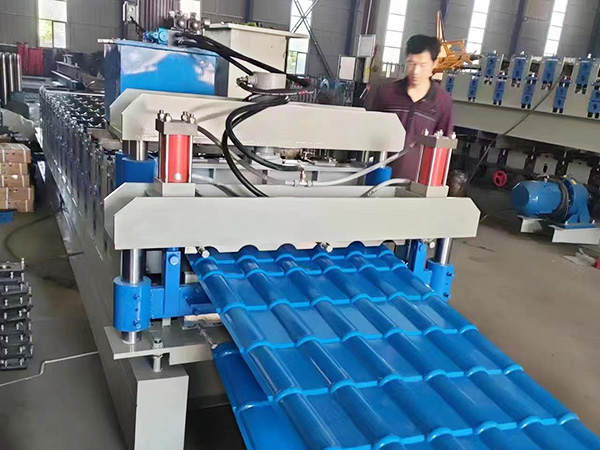
Replace worn bearings, chains, and couplings during the upgrade; they are cheap next to lost production. Re-machining or replacing rolls restores profile accuracy that has drifted over years. A tooling refresh is also the moment to add quick-change features if the product mix has grown beyond what the original line expected.
Hydraulic units that leak or overheat should be rebuilt or swapped. New seals, a clean tank, and a correct pump bring the decoiler back to rated performance. Ignoring the hydraulics leaves the most failure-prone part unchanged, and it will be the first thing to stop the modernized line.

Safety and Compliance Update
Older lines often lack modern guards, light curtains, and labeled emergency stops. Retrofitting these during the upgrade brings the machine to current expectation and protects the team. Inspectors and insurers notice, and so do the operators who run the line every day and who deserve a safe workplace. Treating safety as part of the upgrade, not an extra cost, also shortens the inspection queue when the line restarts and keeps production on schedule.
Budgeting and Payback
Modernization typically costs a fraction of a new line and avoids the lead time of a new build. To justify it, compare the saved scrap, the recovered speed, and the avoided breakdown downtime against the upgrade cost; most shops find payback within a year on a busy line. Stage the work if budget is tight: controls first, then drive, then tooling, each stage paying before the next begins. Keep the comparison simple and written down; a one-page payback sheet convinces both the owner and the bank far better than a verbal promise of better performance that nobody can verify later.
A line treated this way serves as well as a new one for most products, and the manufacturer who supports both old and new lines becomes a long-term partner rather than a one-time seller. That continuity of support is often worth as much as the hardware itself when something fails at the worst possible moment.
Signs Your Line Needs an Upgrade
Watch for the early signals: rising scrap that no roll adjustment fixes, frequent drive trips under load, and control faults that clear only on reset. These point to aging electronics and worn mechanics rather than operator error. Catch them early and a staged upgrade restores output; ignore them and a single failure forces an unplanned, rushed replacement at the worst possible time for the business.
References
Industrial Control System Retrofit Guidelines
Roll Forming Line Modernization Case Studies
Variable Frequency Drive Application Manual
Machine Safety Retrofit Standards
Capital Equipment Refurbishment Economics

CONTACTS
TEL:+8615830824095
URL:www.qiluomachinery.com
ADD:Botou City, Cangzhou City, Hebei Province