


- WEBSITE -





Current location: Home > BLOGS > Technical Documentation >
Roll Forming Machine Specifications and Applicable Scope
Time:2026-09-18 06:34:35 Author:xiangyi Click:100
Roll Forming Machine Specifications and Applicable Scope
Before buying a roll forming machine, the most useful document is the specification sheet; it tells you exactly what the equipment can and cannot do. Buyers often focus only on price and profile shape, then discover the machine will not handle their material thickness or coil width. This article explains the common specifications and how to read them against your real production scope, so the line you buy actually forms your product.
Material Thickness Range
The thickness range is the first number to check. A standard machine may form 0.3 to 1.0 mm for roofing panel, while a heavy-duty purlin line handles 1.5 to 3.0 mm. Running material outside the rated range overloads the drive and shortens roll life. If your products span a wide range, ask the supplier whether one machine covers it or whether you need two configurations built on different frames.
Coil Width and Profile Dimensions
Specification Fields to Compare
Coil width capacity: The maximum strip width the entry and rolls accept. A roof panel machine might take 1000 to 1250 mm; a narrow purlin line far less. Confirm against your coil supplier's slitting width before ordering.
Finished profile width and height: The machine is built to a specific profile drawing. Small changes in leg height or lip can require new rolls, so lock the drawing before ordering tooling.
Station count: More stations mean gentler forming and better surface quality for deep or thick profiles. A simple panel uses 9 to 12 stations; a complex purlin may use 18 or more.
Line speed: Given in meters per minute. Higher speed raises output but needs a stronger drive and a faster flying shear to keep cut accuracy.
Material Grades Within Scope
Specifications should state the applicable steel grades: low-carbon steel, galvanized, pre-painted, and whether high-strength grades are included. Forming high-strength steel needs harder rolls and more power, so a machine rated only for soft steel will struggle and wear quickly. State your exact material when requesting a quote so the supplier sizes the line correctly from the start.
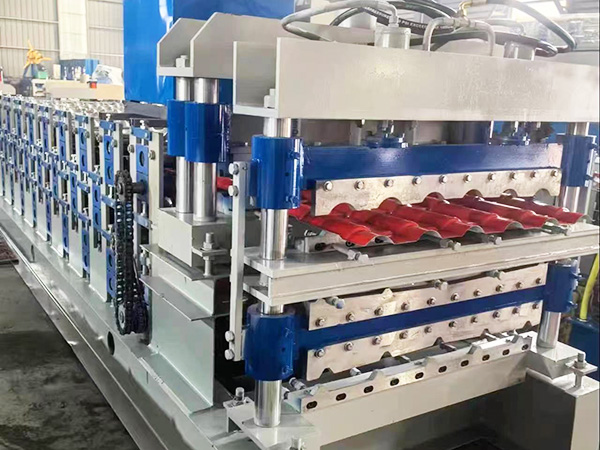
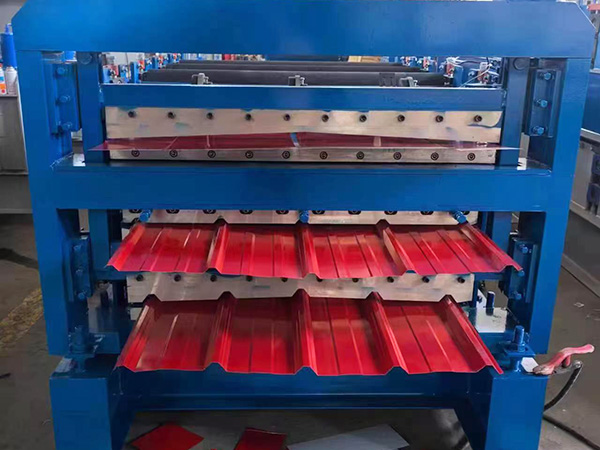
Matching Specification to Product Scope
List every profile you plan to make, with its thickness, width, steel grade, and annual volume. The factory uses this to select roll diameter, shaft size, motor power, and station count. A line built for your scope runs reliably; a line bought on a generic spec sheet often needs rework, extra rolls, or a second machine to cover what was missed.
For shops that make many profiles, a quick-change or cassette system extends the applicable scope without buying separate machines. The trade-off is higher upfront cost and slightly longer changeover, which pays back only above a certain product mix that justifies the investment in flexibility.
How Suppliers Verify the Specs
A reputable manufacturer proves the specification with a trial run before shipment. They form your material, measure the profile against the drawing, and record speed, pressure, and cut length. You receive this report with the machine. If a supplier declines a trial or cannot show measured results, the stated spec is only a claim, and buying on a claim is a risk no factory should take.
Reading the Supplier's Specification Sheet
A trustworthy specification sheet lists rated values, not best-case numbers. It states motor power, hydraulic pressure, roller material, shaft diameter, and tolerance. If a supplier cannot give these, the machine is likely assembled from off-the-shelf parts without engineering. Ask for the full parameter table and the profile drawing before you commit any deposit.
When specifications match your scope and the supplier explains each field clearly, you avoid the costly surprise of a machine that cannot form your product. That match between spec sheet and real production is the foundation of a good roll forming investment and the start of a useful supplier relationship.
Spare Parts and Operator Training
A specification sheet should also name the wear parts the line consumes; rolls, blades, seals, and sensors; with their part numbers. Knowing these before delivery lets you stock the items that stop the line, so a failure becomes a quick swap instead of a wait for the supplier. Training is equally part of the spec: the best machine underperforms in untrained hands, so confirm the supplier includes on-site training in the offer, not as a separate charge discovered later.
References
Roll Forming Machine Technical Parameter Standards
Steel Coil Dimensional Tolerance Specifications
Cold Formed Steel Design and Thickness Guidelines
Equipment Specification Sheet Verification Checklist
Material Grade and Formability Reference Charts

CONTACTS
TEL:+8615830824095
URL:www.qiluomachinery.com
ADD:Botou City, Cangzhou City, Hebei Province